By Dr. Timi Adenuga, Bariatric and Laparoscopic Surgeon
Reading time: 5 minutes
The latest example is retatrutide, an investigational medicine developed by Eli Lilly. Results from two large Phase 3 clinical trials, TRIUMPH-1 and TRIUMPH-2, were published on September 29, 2026, in the New England Journal of Medicine and The Lancet. The results have attracted considerable attention because of the amount of weight loss achieved and the improvements seen in blood sugar and other metabolic health measures. (New England Journal of Medicine)
However, there is an important warning that everyone should understand:
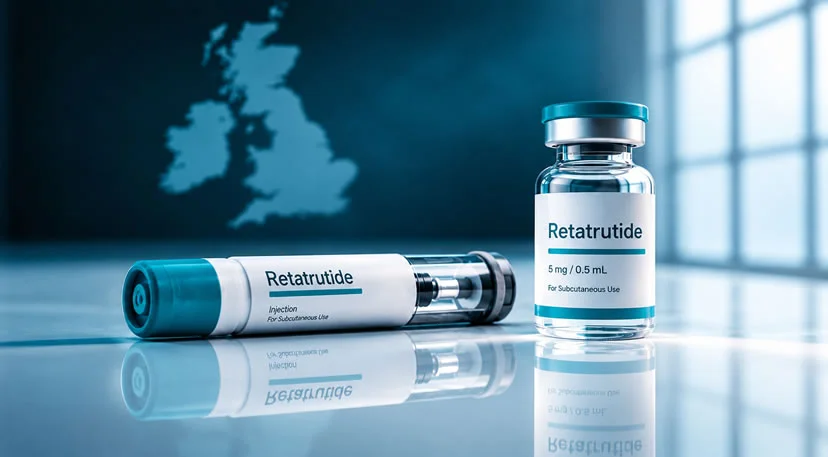
Retatrutide has not yet been approved for routine human use by any regulatory agency. It is still an investigational medicine and should not be purchased or used outside an authorised clinical trial. (Lilly)
What is retatrutide?
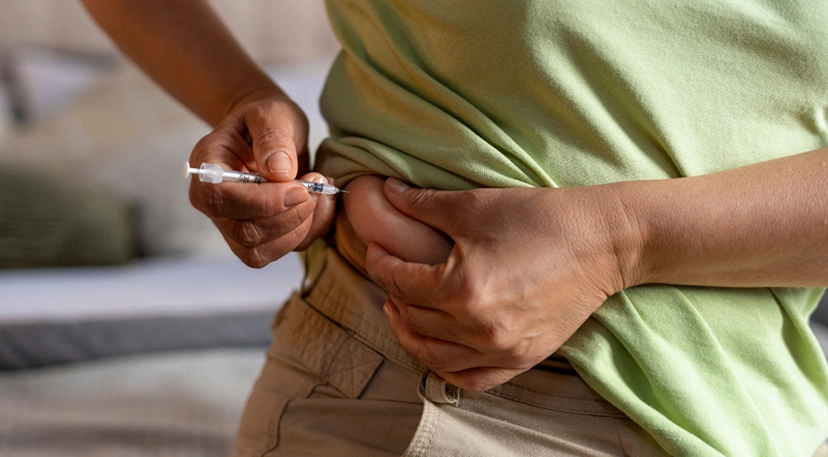
Retatrutide is a once-weekly injectable medicine that works on three hormone pathways involved in appetite, blood sugar and metabolism.
It activates the:
- GLP-1 receptor
- GIP receptor
- Glucagon receptor
This is different from medicines such as semaglutide, which primarily acts through the GLP-1 pathway, and tirzepatide, which acts through GLP-1 and GIP.
Because retatrutide acts on three pathways, it is sometimes described as a triple agonist.
The important point is that this is not simply another version of an existing weight loss injection. It is a new approach to obesity treatment that is still being studied.
How much weight loss did retatrutide produce?
The TRIUMPH-1 trial included more than 2,300 adults with obesity or overweight and weight-related health problems who did not have diabetes. Participants received weekly retatrutide or placebo for 80 weeks. (New England Journal of Medicine)
At the highest studied dose, 12 mg, the average weight change was approximately 25% at 80 weeks using the treatment-regimen analysis.
The results were:
- Retatrutide 4 mg: 17.6% weight loss
- Retatrutide 9 mg: 23.7% weight loss
- Retatrutide 12 mg: 25.0% weight loss
- Placebo: 3.9% weight loss
These are average results. Individual patients lost more or less weight than the average.
The results are significant because weight loss of this magnitude has historically been associated more commonly with metabolic and bariatric surgery than with medication alone.
What does 25% weight loss actually mean?
For someone weighing 120 kg:
25% weight loss = approximately 30 kg
That would mean a reduction from 120 kg to approximately 90 kg.
This is one reason the retatrutide results are generating so much interest.
What happened in people with type 2 diabetes?
The TRIUMPH-2 study looked at a particularly important group: people living with obesity or overweight and type 2 diabetes.
The study included 1,152 adults across 92 centres in eight countries. Participants had an average BMI of 38.2 kg/m² and an average HbA1c of 7.71% at the beginning of the study. (PubMed)
At 80 weeks, average weight loss using the treatment-regimen analysis was:
- 4 mg: 11.9%
- 9 mg: 16.8%
- 12 mg: 18.8%
- Placebo: 5.1%
The highest dose also produced substantial improvements in blood sugar control. HbA1c fell by approximately 1.5 percentage points at the 12 mg dose, with reductions of up to approximately 1.6 percentage points reported across the treatment groups. (PubMed)
However, this should not automatically be called a cure or permanent remission of diabetes. The participants were still receiving treatment, and we do not yet know how their blood sugar would behave after stopping retatrutide.
That distinction is very important.
Retatrutide appears to improve more than weight
One of the most interesting aspects of the TRIUMPH studies is that the benefits were not limited to the weighing scale.
The studies reported improvements in several measures associated with metabolic health.
These included:
- Blood sugar control
- HbA1c
- Blood pressure
- Triglycerides
- Non-HDL cholesterol
- Inflammation markers
- Waist circumference
In TRIUMPH-2, the 12 mg dose was associated with reductions in systolic blood pressure, triglycerides, non-HDL cholesterol and hsCRP.
TRIUMPH-1 also studied people with obesity and knee osteoarthritis or obstructive sleep apnoea. Improvements were seen in knee pain and sleep apnoea measures alongside weight loss. (New England Journal of Medicine)
This is important because obesity is not simply a problem of body size.
Recent Posts
- Retatrutide: What the New Weight Loss Drug Could Mean for Obesity Treatment in Nigeria
- The Dangerous Rise Of Unsupervised Weight Loss
- The First Year After Bariatric Surgery: What to Expect
- Why Do Nigerians Still Hide Their Weight Loss Journeys?
- Gastric Balloon Diet: What Do I Eat After Gastric Balloon Insertion?
Obesity is associated with type 2 diabetes, hypertension, sleep apnoea, cardiovascular disease, joint problems and other chronic conditions.
This is an issue we have discussed extensively in our own research on obesity and bariatric treatment in Nigeria.
What does this mean for Nigerians living with obesity?
Nigeria has a growing obesity problem, yet access to effective obesity treatment remains limited.
In our review, “Obesity and the Need for Bariatric Surgery in Nigeria,” we highlighted the growing burden of obesity in Nigeria and the limited number of metabolic and bariatric procedures being performed locally. (PubMed)
There is also an important economic issue.
In our more recent publication, “Affordability Barriers to Bariatric Procedures in Nigeria,” we examined the financial barriers that prevent many Nigerians who could benefit from metabolic treatment from accessing it. (PubMed)
If retatrutide eventually receives regulatory approval and becomes available in Nigeria at an appropriate cost, it could potentially provide another treatment option for Nigerians living with obesity, particularly people who are not ready for surgery or who need medical treatment as part of a broader obesity-management programme.
But it is too early to know exactly how retatrutide will fit into Nigerian obesity care.
The TRIUMPH trials were not specifically designed to study Nigerians, and the drug still needs to go through the appropriate regulatory process before it can be routinely prescribed.
Retatrutide does not make bariatric surgery obsolete
The new results should not be interpreted as meaning that bariatric surgery is no longer necessary.
Obesity treatment is not a competition between surgery, medication, balloons and lifestyle treatment.
Different patients need different treatments.
Our previous research has examined several of these options.
For example, our research on intragastric balloons found that fluid-filled balloons produced meaningful weight loss in patients treated at a Nigerian bariatric centre. In our 2026 study of 113 patients, mean total body weight loss ranged from 9.8% with Allurion to 13.1% with Spatz3, although the difference between balloon types was not statistically significant. No major complications were observed. (PubMed)
This illustrates an important point.
Obesity treatment exists on a spectrum.
For some people, structured medical treatment may be appropriate. For others, an intragastric balloon may be suitable. For patients with more severe obesity or significant obesity-related diseases, metabolic surgery may provide greater and more durable weight loss and metabolic benefits.
The correct treatment should therefore be based on the patient’s BMI, medical conditions, previous treatment attempts, preferences, risk profile and long-term goals.
What about gastric sleeve and gastric bypass?
Bariatric surgery remains one of the most effective treatments for severe obesity.
Sleeve gastrectomy and gastric bypass can produce substantial and sustained weight loss and can also improve diseases such as type 2 diabetes, hypertension and sleep apnoea.
The important difference when comparing surgery with retatrutide is that the current retatrutide trials are not head-to-head trials against bariatric surgery.
Therefore, it would be inappropriate to say that retatrutide is better than sleeve gastrectomy or gastric bypass based on the current evidence.
What can be said is that the amount of weight loss seen with high-dose retatrutide is entering a range that overlaps with the weight loss achieved by some patients after metabolic surgery.
Future research will need to tell us much more about how the two approaches compare over many years.
Read about Gastric sleeve in Nigeria and Gastric Bypass.
What about side effects?
The most common side effects reported with retatrutide were gastrointestinal.
These included:
- Nausea
- Diarrhoea
- Constipation
- Vomiting
Hypotension and abnormal skin sensations, known as dysesthesia, were also reported more frequently with retatrutide than placebo in TRIUMPH-2. (PubMed)
As with other medicines affecting appetite and gastrointestinal function, careful dose escalation and medical supervision will be important if retatrutide eventually becomes an approved treatment.
An important warning about retatrutide being sold in Nigeria
This is perhaps the most important message in this article.
Retatrutide is not currently approved for routine human use.
Eli Lilly states that retatrutide has not been approved by any regulatory agency and that it is legally available only to participants in authorised clinical trials. Lilly has specifically warned about products being sold online, through medical spas and other businesses as “retatrutide.” These products may contain the wrong ingredient, incorrect amounts of the active ingredient, contaminants or other impurities. (Lilly)
This means that patients should be extremely cautious about clinics, spas, pharmacies or online sellers in Lagos, Abuja or any other Nigerian city claiming to sell or administer retatrutide for weight loss.
A product being advertised as “research retatrutide”, “retatrutide peptide” or “retatrutide injection” does not make it an approved medicine.
NAFDAC has repeatedly warned Nigerians about the risks of unregistered and falsified medicines, noting that their safety, quality and effectiveness cannot be guaranteed.
Until retatrutide receives the necessary regulatory approvals, patients should not purchase or inject products claiming to contain retatrutide outside an authorised clinical trial.
The fact that a product is being sold by a clinic or medical spa does not by itself establish that the product is genuine, approved or safe.
What could the future look like?
Retatrutide represents an important development in obesity medicine.
The TRIUMPH trials suggest that a once-weekly medicine can produce substantial weight loss while also improving blood sugar and several other metabolic health measures.
For Nigeria, this could eventually be significant.
The country needs more effective and more accessible ways of treating obesity. But new treatments must be introduced through proper regulatory channels, with trained clinicians, appropriate patient selection and long-term follow-up.
At GetSlim, we believe that obesity should be treated as a chronic medical disease rather than simply a problem of willpower.
Our research and clinical work have looked at surgery, intragastric balloons and other approaches to obesity treatment in the Nigerian population. Retatrutide, if eventually approved and made appropriately available, could become another tool in that treatment pathway.
For now, however, retatrutide remains an investigational medicine.
The promising results should generate interest, but they should not lead patients to experiment with unapproved products.
Frequently Asked Questions
Is retatrutide approved for weight loss?
No. Retatrutide is still an investigational medicine and has not been approved by any regulatory agency for routine human use. (Lilly)
How much weight can retatrutide cause?
In TRIUMPH-1, adults with obesity without diabetes receiving 12 mg had an average weight reduction of 25.0% at 80 weeks using the treatment-regimen analysis. (New England Journal of Medicine)
Does retatrutide treat type 2 diabetes?
TRIUMPH-2 showed substantial improvements in HbA1c and body weight in people with obesity or overweight and type 2 diabetes. However, retatrutide is still investigational and should not currently be used outside an authorised clinical trial. (PubMed)
Can retatrutide replace gastric sleeve surgery?
There is currently no head-to-head trial establishing that retatrutide is equivalent or superior to sleeve gastrectomy. Retatrutide produced substantial weight loss in clinical trials, but longer-term comparative research is still needed.
Can I buy retatrutide in Nigeria?
Retatrutide is not currently approved for routine human use. Products being sold as retatrutide outside authorised clinical trials may be unapproved or falsified and may contain unknown ingredients or contaminants. (Lilly)
What should I do if I am struggling with obesity?
Speak with a qualified obesity physician or bariatric surgeon. Effective treatment can include structured medical weight management, anti-obesity medicines that are approved and appropriate for the patient, intragastric balloons, metabolic surgery or a combination of approaches. You can reach out to us on Whatsapp on +2347016222580 or send an email to frontdesk@getslim.ng to book an appointment.
Contact Us
Phone: 0701 622 2580
Email: frontdesk@getslim.ng