
Gastric Bypass Surgery in Nigeria with Comprehensive Aftercare
What is a Mini Gastric Bypass Surgery?
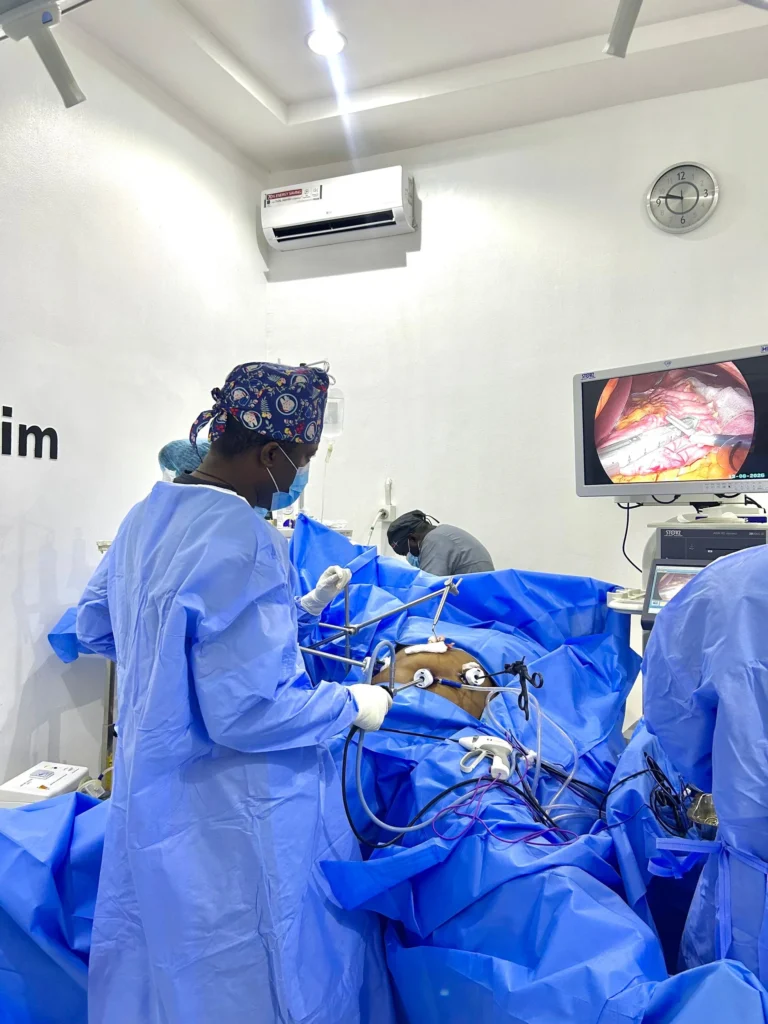
A mini gastric bypass is a simpler, shorter version of the traditional gastric bypass.
During the procedure, a surgeon divides the stomach vertically to create a long, narrow, tube-shaped pouch, similar to a banana. This pouch becomes your new, smaller stomach.
The surgeon then connects the pouch directly to a loop of the small intestine, bypassing roughly 150 to 200 centimetres of the intestine. This means food moves from the pouch into the lower small intestine, skipping the section where many calories and nutrients are absorbed.
As a result, you feel full sooner, eat less, absorb fewer calories, and lose significant weight.
| Procedure time | 60–90 minutes |
| Hospital stay | 1–2 nights |
| Expected Weight loss | 60–80% of excess weight within 1-2 years |
| Technique | Minimally invasive laparoscopic surgery |
| Starting price | From ₦10.4 million |
| Performed by | Dr. Timi Adenuga, MBBS, ChM, FWACS |
How Does This Differ From the Traditional Gastric Bypass (Roux-En-Y or RNY )?
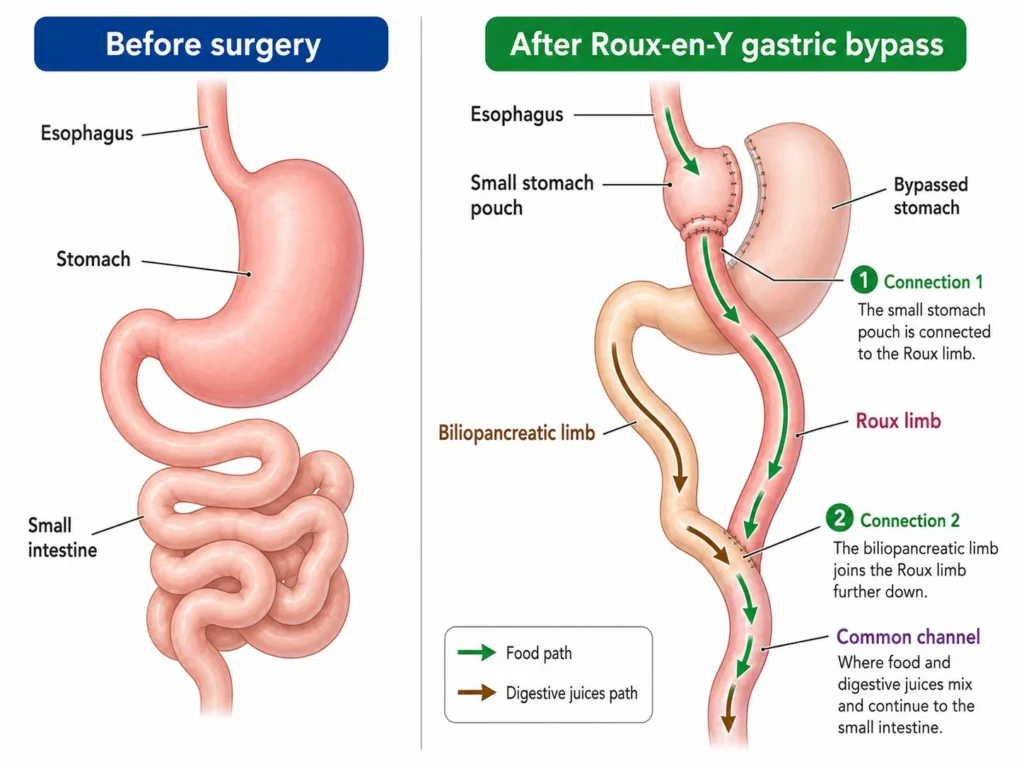
Traditional gastric bypass, also called Roux-en-Y, is usually more complex and takes longer to perform.
It involves creating a very small stomach pouch and making two separate intestinal connections, which form a Y-shaped configuration in the small intestine. Hence the name, “Roux-en-Y.”
While both procedures are forms of gastric bypass, the key difference is the number of intestinal connections. Mini gastric bypass achieves similar weight-loss results with one connection between the stomach pouch and small intestine, while Roux-en-Y requires two.
This makes mini gastric bypass simpler and shorter to perform, while still helping patients lose a significant amount of weight.
How Does a (Mini) Gastric Bypass Differ From a Gastric Sleeve?
A gastric sleeve removes 75 to 80% of your stomach, leaving a smaller, sleeve-shaped stomach. Your digestive path stays exactly the same. Food still travels through your stomach and small intestine the way it always has, just in smaller portions.
A mini gastric bypass however, restricts how much you eat by rerouting where food goes. By bypassing a significant section of the small intestine, your body absorbs fewer calories and experiences metabolic changes that a sleeve may not produce as strongly.
A mini gastric bypass however, restricts how much you eat by rerouting where food goes. By bypassing a significant section of the small intestine, your body absorbs fewer calories and experiences metabolic changes that a sleeve may not produce as strongly.
Why Gastric Bypass at Getslim?
Most bariatric clinics in Nigeria perform gastric sleeve surgery. Very few perform bypass, and fewer still perform it regularly enough to do it well. Getslim ticks these boxes.
Dr. Timi Adenuga, the Lead Bariatric Surgeon, is one of a small number of surgeons in Nigeria with the specialised experience and clinical setup to perform mini gastric bypass safely and consistently. With over 1,000 bariatric procedures completed across our Lagos and Abuja clinics, you receive adequate and comprehensive care before and after surgery.
Is Gastric Bypass Right for Me?
A gastric bypass is fundamentally different from a sleeve, so we only recommend it when it’s the best fit for your health profile.
This bariatric surgery may be right for you if you:
- Have a BMI of 35 or above.
- Have a BMI of 30 or above with an obesity-related condition such as Type 2 diabetes, high blood pressure, sleep apnea, or joint problems
- Have tried other weight loss methods without lasting results.
- Are prepared to commit to lifelong dietary changes and follow-up care.
How Gastric Bypass Service Works
Consultation: You’ll speak with Dr. Timi or another equally qualified surgeon on our team about a full health profile, including your weight history, existing conditions, and what you’ve already tried.
By the end of this consultation, you’ll know whether a mini gastric bypass is the right procedure for you.
Pre-operative preparation: Because bypass is a more complex procedure than the sleeve, your pre-operative assessment is thorough, including blood tests, physical examination, cardiology and anaesthesia evaluations, and a nutritional baseline.
This is how our doctors ensure your body is ready for what bypass demands of it.
Surgery day: Our bariatric surgery team performs your mini gastric bypass. The procedure takes 60 to 90 minutes.
The first 48 hours: Bypass recovery requires closer monitoring than sleeve. You stay 1-2 days at our clinic. Our nursing team monitors your vitals, manages your comfort, and carefully introduces fluids.
Going home: Before you leave, we’ll walk you through your post-operative diet plan, explain your supplement schedule in detail, and hand over your discharge medications. You’ll know exactly what to expect over the next four weeks before you walk out the door.
1 year of active follow-up: Bypass permanently changes how your body absorbs nutrients and this means your follow-up is not optional. Blood tests will be set at specified intervals to track your iron, B12, vitamin D, and calcium. Our dietitians will then adjust your plan based on your results.
What Results Can You Expect After Gastric Bypass Surgery?
Results vary by person, but here’s what most patients experience:
0 to 6 months:
rapid initial loss, typically 20 to 30 % of excess weight.
6 to 12 months:
continued loss, reaching 50 to 70 % of excess weight.
1 to 2 years:
most patients have lost 60 to 80 % of excess weight and are maintaining it.
Note: Individual results depend on lifestyle changes, age, and how closely you follow your post-op plan.
How Much Does Gastric Bypass Surgery Cost in Nigeria?
Gastric Bypass
₦10.4 million (all-inclusive)
Gastric bypass at Getslim starts from ₦10.4 million (all-inclusive). Your exact quote depends on your health assessment, pre-operative tests, and clinic location.
That price covers everything you need before, during, and after surgery:
- Pre-operative tests and medical review
- Anaesthesia and cardiology evaluation
- Nutritional assessment
- Dietitian consultations
- A two-day hospital stay
- Post-operative medications
- One year of follow-up care with our doctors and dietitians.
VIP packages are also available for a more personalized experience. Speak to the team for details.

You Don't Need to Travel Abroad
Gastric bypass may look cheaper abroad at first. But once you factor in recovery, complications, travel risk, and long-term follow-up, the true cost can be much higher than the package price.
Complications Need Immediate Local Support
Anastomotic leaks happen in 1.5 to 6% of bypass surgeries and can occur up to several weeks after the procedure. If you’ve flown home to Nigeria and a leak develops, you need immediate access to a surgical team that knows your case, has your imaging, and can act.
Long-Haul Travel Can Increase Recovery Risk
Venous thromboembolism, also known as “blood clots” risk increases with long flights shortly after bariatric surgery. Your body is managing a new digestive connection while you sit immobile for five or more hours at altitude. This is one more reason your recovery is safer close to home.
Nutritional Deficiencies Need Long-Term Monitoring
A 2023 study showed that vitamin and mineral deficiencies become more common over time after bariatric surgery, increasing from 23% after 1 year to 42% after 3 years. Another 2025 Wiley review found some deficiencies may not appear until more than two years after surgery, especially if follow-up care and supplements are not well managed. This is why regular blood tests and ongoing support from a dietitian are important.
Getslim’s 12-month follow-up programme is built to catch these early, with regular blood tests, supplement adjustments, and dietitian support long after you’ve left the theatre.
Meet Your Doctor

Dr. Timi Adenuga, MBBS, ChM, FWACS
Lead Bariatric Surgeon, Getslim Nigeria
Dr. Adenuga is one of Nigeria’s most experienced bariatric surgeons, with over 1,000 procedures performed across Getslim’s Abuja and Lagos clinics. He leads the surgical programme and personally oversees every patient’s care journey.
Our Specialist Team
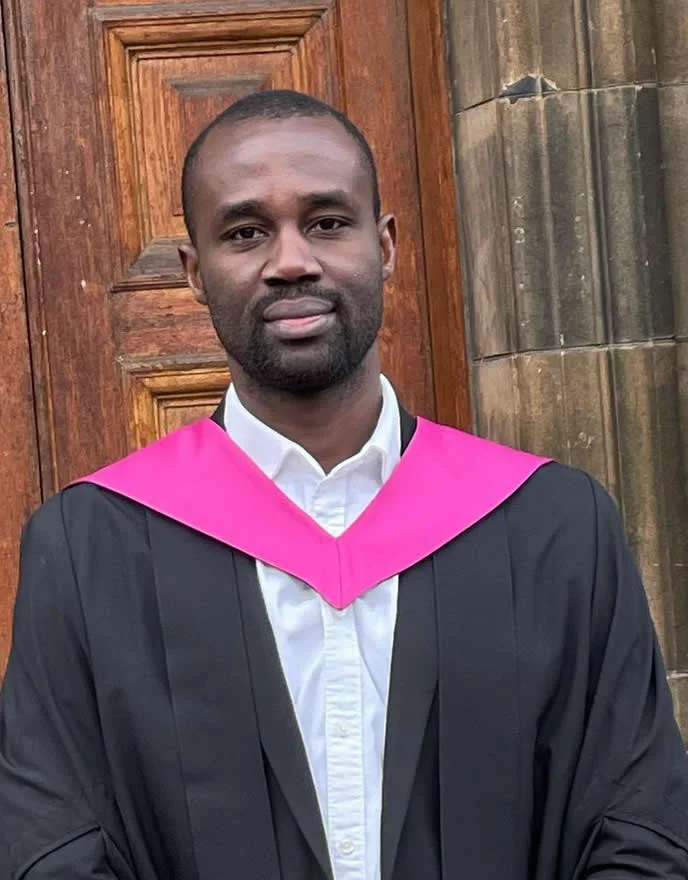
MBBS, ChM, FMCS
A board-certified General Surgeon with 15+ years of experience and 300+ procedures annually, trained at the Universities of Edinburgh and Strasbourg. He consults at Getslim Lagos with a focus on obesity and its complications

MBBS · SCOPE Certified,
A Bariatric Care Physician with SCOPE Certification from the World Obesity Federation, specialising in obesity management, perioperative care, and metabolic health. She consults across Getslim Nigeria clinics and contributes to education through the Getslim Foundation.

Bariatric Dietitian
A clinical dietitian specialising in pre- and post-bariatric nutrition, graduated from Bayero University Kano. At Getslim, Isaiah develops personalised meal plans and provides nutritional support to help patients recover safely and maintain long-term results.
Frequently Asked Questions
Is gastric bypass painful?
Most patients experience some discomfort during the first few days, but they don’t describe it as severe. Because we perform gastric bypass using laparoscopic incisions, you’ll usually recover faster and with less pain than you would after traditional open surgery. We’ll also give you medication to keep you as comfortable as possible throughout your recovery.
What is dumping syndrome, and will I experience it?
Dumping syndrome happens when food moves too quickly from your stomach into your small intestine. It commonly occurs after eating sugary or high-fat foods and can cause nausea, cramping, sweating, dizziness, or diarrhea.
You can usually prevent it by eating slowly, choosing the right foods, and following your nutrition plan. Our dietitians will show you exactly how to eat after surgery to help you avoid it.
Can I have gastric bypass if I've already had a gastric sleeve?
Yes. You can choose to convert from a gastric sleeve to a gastric bypass when you haven’t lost enough weight or you’ve developed severe acid reflux (GERD).
Our doctor will review your medical history, assess your current health, and help you decide whether gastric bypass is the right next step. If you’ve had your sleeve surgery elsewhere, you can simply bring any records you have, and we’ll take it from there.
What is the gastric bypass surgery recovery time?
Most patients spend 1 or 2 nights in the hospital before going home. You can usually get back to your normal routine after 4 to 6 weeks.
Recovery looks a little different for everyone, but we’ll support you every step of the way with regular follow-up appointments and guidance.
What are some gastric bypass side effects?
These are some temporary side effects you may experience while your body adjusts:
- Nausea if you eat too quickly or too much.
- Temporary tiredness during recovery
- Dumping syndrome (rapid emptying of food into the intestine)
- Changes in your bowel habits
- Vitamin and mineral deficiencies if you don’t take your supplements
Most of these issues improve with time and are easy to manage when you follow your nutrition plan, take your supplements, and attend your follow-up appointments.
What happens if I miss supplements after bypass?
If you regularly skip your supplements, you can develop deficiencies in iron, vitamin B12, calcium, or vitamin D, which may lead to fatigue, anaemia, weak bones, and other health problems.
We’ll help you stay on track with personalised guidance and regular blood tests so we can spot and treat any deficiencies early
Is gastric bypass surgery reversible?
Technically, yes. Doctors usually consider reversal only in very uncommon situations involving serious complications.
Before choosing gastric bypass, it’s best to think of it as a permanent procedure and a lifelong commitment to better health. We’ll make sure you fully understand the surgery before you decide if it’s right for you.
What can you never do again after gastric bypass surgery?
After gastric bypass, some of your habits will need to change for good.
You’ll need to eat smaller portions, avoid overeating, limit sugary foods, stay hydrated, prioritise protein, and take your vitamins every day.
You can still enjoy a wide variety of foods over time. You’ll simply eat differently, and those new habits are what will help you maintain your weight loss for years to come.
Can you gain weight after a gastric bypass?
Yes, some weight regain is possible. Gastric bypass is not a quick fix. The patients who enjoy the best long-term results are those who stick to healthy eating habits, stay active, keep up with their follow-up appointments, and follow their personalized nutrition plan.
Start Your Bypass Journey with Confidence
Speak with our doctors to determine whether the gastric bypass surgery is right for you. Consultations are available online at our Abuja and Lagos clinics.